
Why Visibility Without Brand Is Not As Effective
How AI search, branded intent, and product citations quietly rewired marketing.

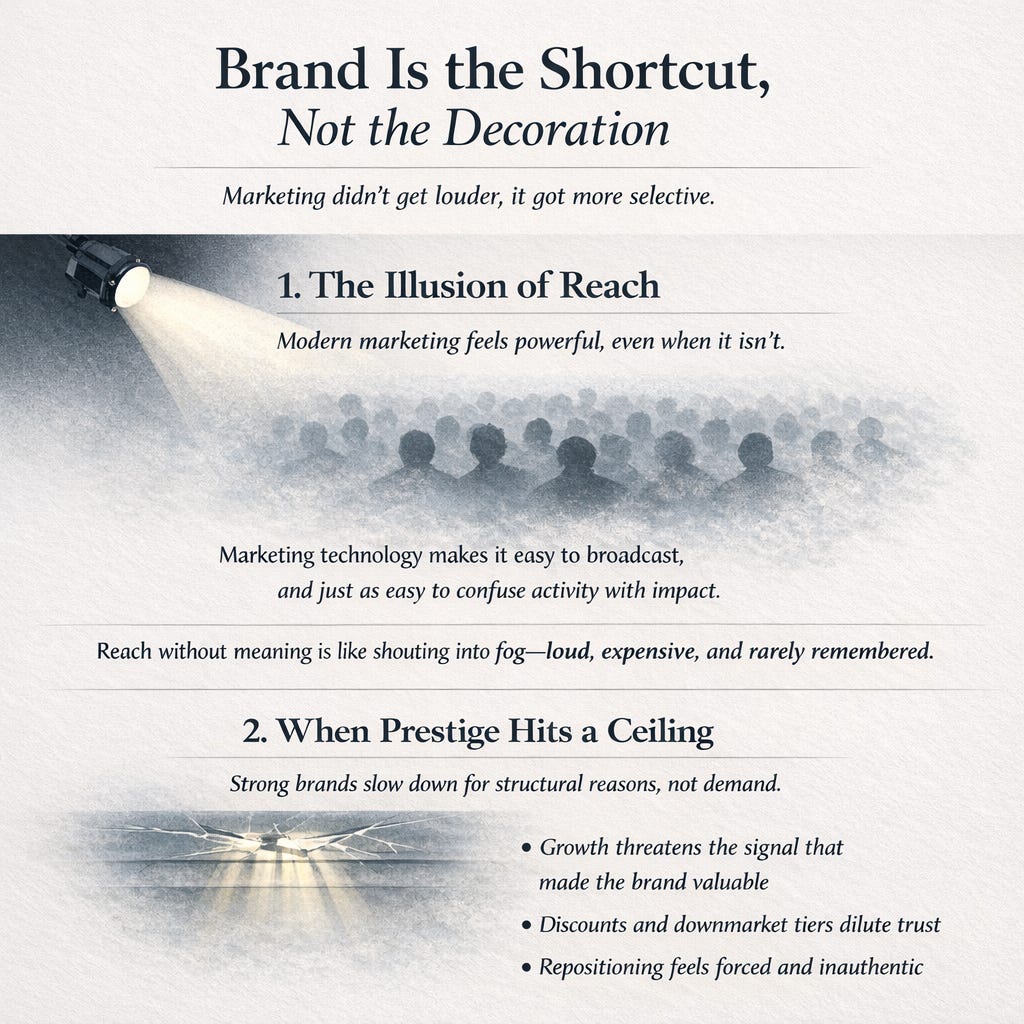
Working in marketing is eye-opening in more ways than one. Modern marketing technology has made it easier than ever to reach consumers, and just as easy to convince businesses that they are doing so, even when they are not.
Few disciplines are as misunderstood, or as difficult to execute well, as brand marketing.
At many organizations I’ve worked with, prestigious brands eventually hit a ceiling. Growth slows, not because demand disappears, but because expansion threatens the very signal that made the brand valuable. In response, companies often try to move downmarket, adding lower pricing tiers, leaning on discounts, or flooding channels with promotions. After exhausting that path, they attempt to claw back prestige through repositioning. Neither strategy works particularly well. One erodes trust, the other feels forced.
Branding is often romanticized, especially in UX circles, and frequently reduced to a single aesthetic, Apple as shorthand. Clean spaces, white rooms, blond wood, minimal type. But branding is not an aesthetic, it is a language. Walmart has a brand. Coca-Cola has a brand. Avatar has a brand. So do political figures, many of whom rely on professional writers to shape every public word, from speeches to tweets. Brand is how meaning travels at scale.
The data supports this. Google still controls roughly 91 percent of global search, and AHREFs, a third-party auditor, and the second largest web crawler, once found that 45.7 percent of all Google searches were branded searches. Nearly half of search intent is not exploratory, it is navigational. People are not asking what exists, they are asking for something specific by name.
For years, it was unclear how AI search would make money. If AI systems summarize the web and rephrase existing information, where does advertising fit? How do you place an ad in front of someone who never sees a traditional results page?
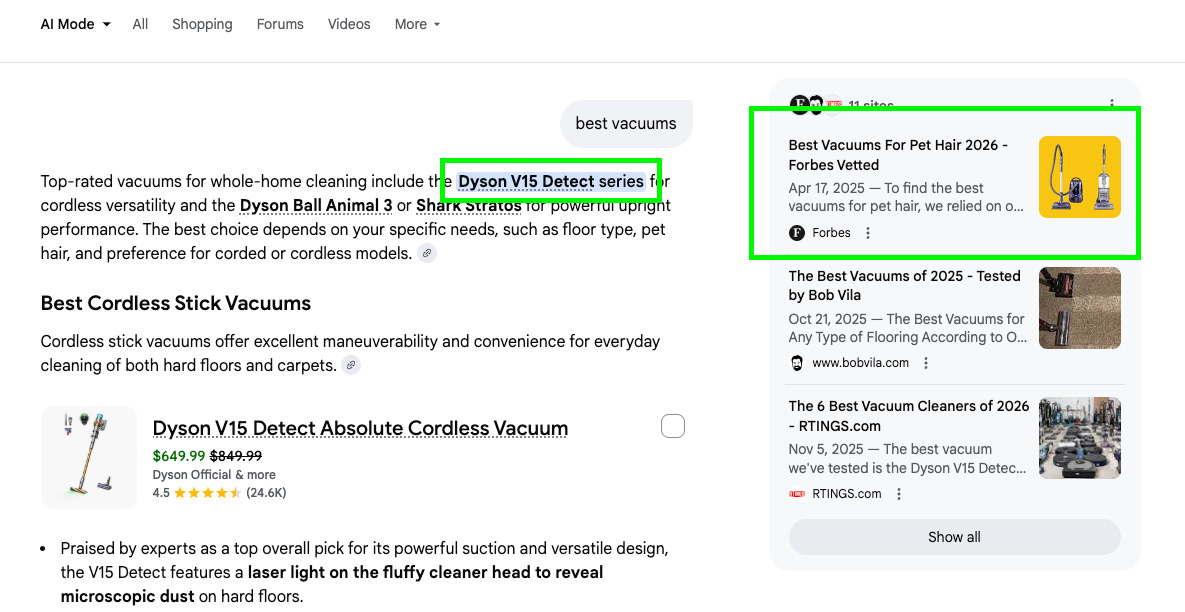
Google solved this by leaning into brand behavior. With the knowledge that most searches are branded, Gemini now accelerates users through the purchasing cycle, surfacing products directly inside answers. Clicking those products generates new, explicit product queries. Ads re-enter the loop.
This is the shift we are living in now. In 2026, the new era of marketing is not chasing generic keywords. It is earning a place inside branded searches. And if a company does not have a brand, then the alternative is clear. Own the product feeds.
Curious how AI search would interpret your product? Let Lubble take a look.
This article reflects the author’s professional experience and analysis. Examples are illustrative, and results may vary based on industry, execution, and context.